
Call: 07971189998
 Send Inquiry
 Send Inquiry
Nickel strip
Price 1150 INR/ Meter
MOQ : 1 Meter
Nickel strip Specification
- Melting Point
- 1453C
- Purity(%)
- 99.6%
- Particle Size
- Not Applicable (Strip Form)
- Grade
- Nickel 200 / Nickel 201
- Boiling point
- 2732C
- Metal Type
- Non-Ferrous, Nickel
- Usage & Applications
- Battery packs (spot welding), electronics, electrical connections, plating, resistance elements
- Product Type
- Nickel Strip
- Material
- Pure Nickel
- Shape
- Coil/Strip
- Chemical Composition
- Ni 99.6%, Minor: Fe, C, S, Si, Mg
- Density
- 8.89 Gram per cubic centimeter(g/cm3)
- Size
- Customizable (common: 0.1mm-2mm thick, 3mm-100mm wide)
- Weight
- Rolls available from 1kg upwards depending on length and thickness
- Dimension (L*W*H)
- Custom cut, usually Length (as per roll or strip), Width 3mm-100mm, Thickness 0.1mm-2mm
- Color
- Silvery-Gray
- Tensile Strength
- 450 MPa
- Surface Finish
- Bright/Shiny, Smooth
- Resistivity
- 0.00922 mm2/m at 20C
- Hardness
- 55-65 HRB (Rockwell B)
- Corrosion Resistance
- Excellent in alkaline and neutral salt solutions
- Operating Temperature Range
- Up to 600C
- Packaging Type
- Coil wrapped in plastic, boxed
- Elongation
- 35%
- Standard
- ASTM B162 / B160
Nickel strip Trade Information
- Minimum Order Quantity
- 1 Meter
- Supply Ability
- 1000 Per Day
- Delivery Time
- 3 Days
- Sample Policy
- Contact us for information regarding our sample policy
About Nickel strip
A nickel strip is a thin, flat piece of nickel metal used mainly in battery packs and electrical connections. It is commonly used when building or repairing rechargeable battery packs such as 18650 lithiuma ion battery packs. Description * Material Pure nickel or nickel-plated steel * Shape Thin strip or ribbon * Thickness Usually 0.1 mm a 0.3 mm * Width Often 6 mm a 10 mm (varies by use) * Color Silver metallic Main Uses 1. Battery pack assembly Nickel strips connect multiple batteries together in series or parallel using spot welding. 2. Electrical conductivity Nickel has good electrical conductivity and corrosion resistance, making it reliable for battery connections. 3. Heat resistance It tolerates heat generated during spot welding. Why Nickel is Used * Low electrical resistance * Corrosion resistant * Strong and flexible * Compatible with spot welding Common Applications * Power banks * Electric vehicle battery packs * Laptop batteries * Solar battery storage * DIY 18650 battery packs Types 1. Pure nickel strip a better conductivity, more expensive 2. Nickel-plated steel strip a cheaper but slightly higher resistance a Tip For battery packs, pure nickel strips are preferred because they carry current better and heat less. If you want, I can also explain: * How to identify pure nickel vs nickel-plated strip * Nickel strip current capacity chart * How to spot-weld nickel strips to batteriesSuperior Material Quality and Specifications
Manufactured from Nickel 200/201 with 99.6% purity, this strip maintains a silvery-gray appearance and robust structure, featuring a hardness of 55-65 HRB. Its high melting (1453C) and boiling points (2732C) make the material stable under extreme conditions. The customizable dimensions and coil format cater to diverse operational needs, whether for small-scale electronics or large industrial fabrications.
Optimal Performance and Safety Features
Offering low resistivity (0.00922 mm2/m at 20C) and excellent corrosion resistance in alkaline and neutral environments, this nickel strip ensures safe and reliable electrical performance. Each coil is securely wrapped in plastic and boxed, protecting against damage and contamination during shipment and storage. With up to 35% elongation, the material can withstand mechanical stresses, making it especially suitable for spot welding in battery pack manufacturing.
FAQ's of Nickel strip:
Q: How is the nickel strip used in battery pack assembly and electronics?
A: The nickel strip is most commonly used for spot welding connections within battery packs, providing a reliable, conductive bridge between battery cells. Its excellent electrical conductivity and mechanical strength make it suitable also for bus bars, terminals, and electrical contacts in various electronic assemblies.Q: What are the key benefits of choosing a nickel strip with 99.6% purity and ASTM B162/B160 compliance?
A: A high-purity nickel strip ensures minimal impurities that could impact conductivity or corrosion resistance. Compliance with ASTM B162/B160 standards guarantees consistent material performance, mechanical properties, and quality for demanding industrial and electronic applications.Q: Where can this nickel strip be applied for best results?
A: This nickel strip's versatility allows its use in industries such as battery manufacturing, electronics, electrical engineering, and plating. Its outstanding corrosion resistance makes it particularly effective in alkaline or salt-laden environments, and it performs reliably in high-temperature applications up to 600C.Q: What packaging and shipment options are offered for the nickel strip?
A: The nickel strips are typically coil-wrapped in protective plastic and placed in cartons or boxes to minimize transit damage. Rolls can be ordered from 1kg upward, with weight depending on the specific strip length, width, and thickness required.Q: How is the mechanical strength and flexibility of this nickel strip ensured during use?
A: With a tensile strength of 450 MPa and an elongation rate of 35%, the strip offers significant mechanical resilience and flexibility. This makes it capable of withstanding bending and forming processes without cracking, making it ideal for both automated and manual assembly lines.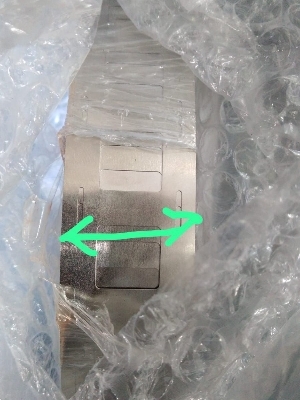
Tell us about your requirement

Price:
Quantity
Select Unit
- 50
- 100
- 200
- 250
- 500
- 1000+
Additional detail
Mobile number
Email

More Products in Nickel Strip Category
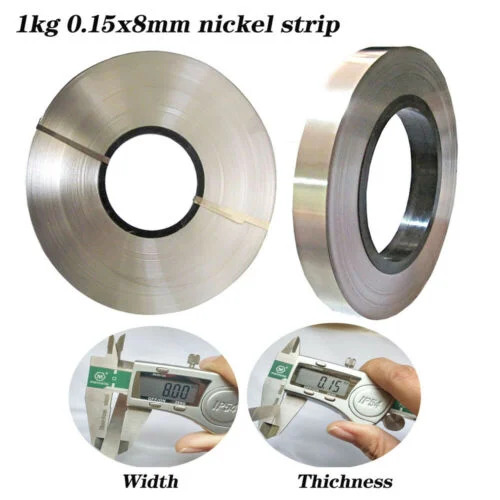
Raw Material 18650 Battery Nickel Strip
Price 450 INR / Kilograms
Minimum Order Quantity : 100 Kilograms
Color : Silver
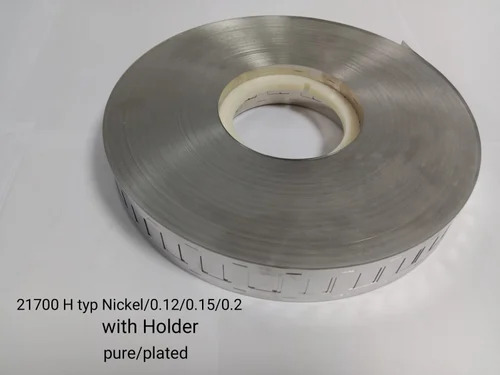
21700 H Nickel Strip
Price 450 INR / Kilograms
Minimum Order Quantity : 10 Kilograms
Color : Silver
Size : 3 mm thickness
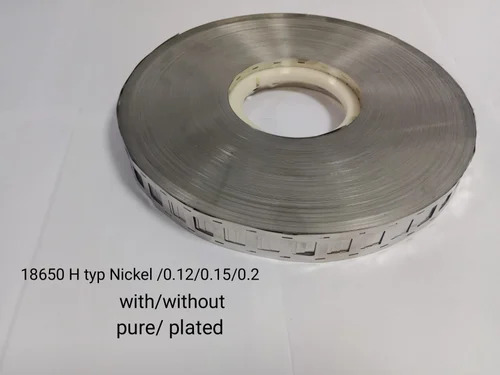
H 18650 Nickel Strip
Price 450 INR / Kilograms
Minimum Order Quantity : 10 Kilograms
Color : Silver
Size : 3 mm thickness
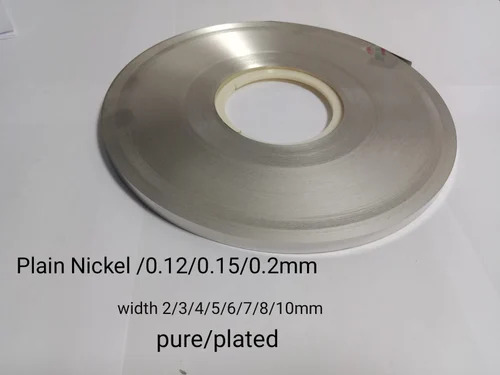
Plain Nickel Strip
Price 450 INR / Kilograms
Minimum Order Quantity : 100 Kilograms
Color : Silver
Size : 3 mm thickness

Contact Details
Praveen Marketing
GST : 29AANPS3613A1ZR
- No.4/1, 2rd Floor, P. R. Line 2nd Cross, S J P Road Cross,Bengaluru - 560002, Karnataka, India
- Phone :07971189998
 Send Inquiry
Developed and Managed by Infocom Network Private Limited.
